
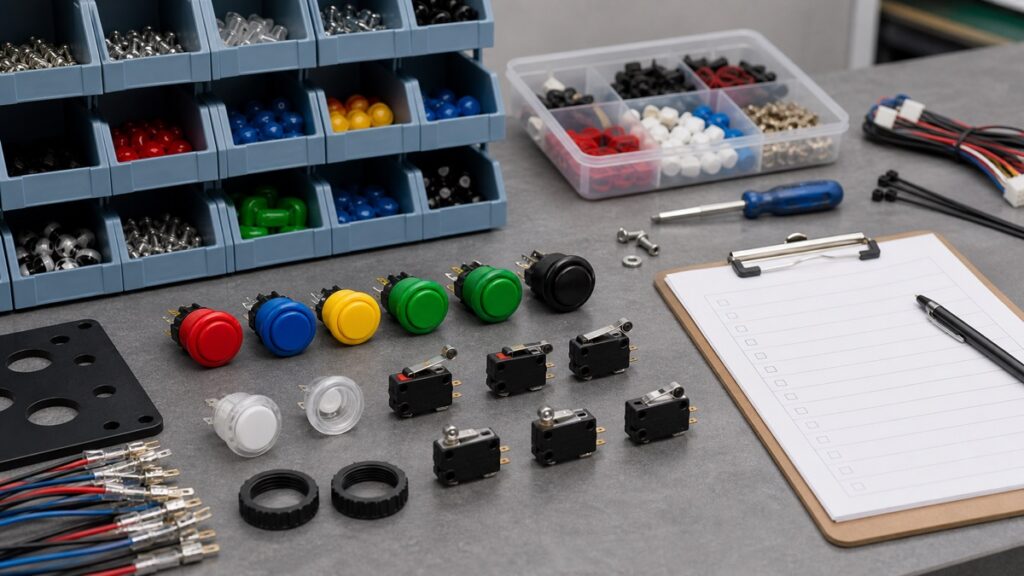
Replacement Parts Maintenance Planning for Commercial Amusement Equipment starts with the machine, not just the component. Usage frequency, player behavior, panel thickness, wiring access, and service habits all change what a suitable part should look like. Comparing only appearance or unit price can hide the later cost of downtime, rework, and spare part management.
When sourcing replacement parts, buyers should move from “will it fit?” to “will it run consistently, service easily, and remain stable across batches?” This guide focuses on consumption frequency, downtime risk, stock quantity, compatibility, and field replacement convenience so purchasing, engineering, and maintenance teams can align before bulk ordering.
Start With the Application
arcade replacement parts maintenance is not an isolated material decision. Commercial arcade cabinets, redemption machines, control desks, retrofit panels, and export projects place different weight on operation frequency, tactile feedback, visual consistency, and repair speed. High-traffic locations usually need stronger attention to wear, reset feel, and terminal retention; appearance-led projects need color, lighting, and installed height locked earlier.
Before requesting a quotation, prepare panel drawings, mounting holes, estimated annual quantity, operating environment, and target feel. This helps the supplier judge whether a standard specification fits or whether tooling, wiring, or mechanical changes should be discussed.
What to Check During Sample Review
- Confirm that consumption frequency, downtime risk, stock quantity, compatibility, and field replacement convenience matches the cabinet structure, controller board, and harness plan.
- Check the consistency of plastic parts, metal parts, and terminals so the production batch does not drift away from the sample.
- Install samples into a real panel instead of testing only on a desk.
- Record installation time, replacement method, required tools, and possible service obstacles.
- Photograph visible parts and confirm color, finish, and packaging protection.
If samples are sent to an overseas review team, include the specification sheet, installation notes, and a feedback form. Specific feedback makes engineering changes easier to close.
Control Risk Before Bulk Purchasing
Before a bulk order, define more than price and lead time. Dimension ranges, operating feedback, visual defect rules, packaging method, and sampling level should be part of the purchasing conversation. For high-use or wear parts, spare quantity and future compatibility also matter.
Do not leave every issue for production. If sample testing shows tight installation space, awkward terminal direction, harness strain, or difficult replacement, mechanical changes should be discussed before the order is released.
Make Supplier Communication More Efficient
When discussing replacement parts, share machine photos, target product, key dimensions, electrical requirements, expected quantity, and packaging or shipping needs in one package. For OEM/ODM projects, state which requirements are fixed and where the factory may suggest alternatives.
Relevant pages include push buttons, microswitches, accessories. For a new project, you can also contact the Baolian team with photos, drawings, or target specifications so engineering and sales can review the feasible direction first.
Comments
No comments yet.