
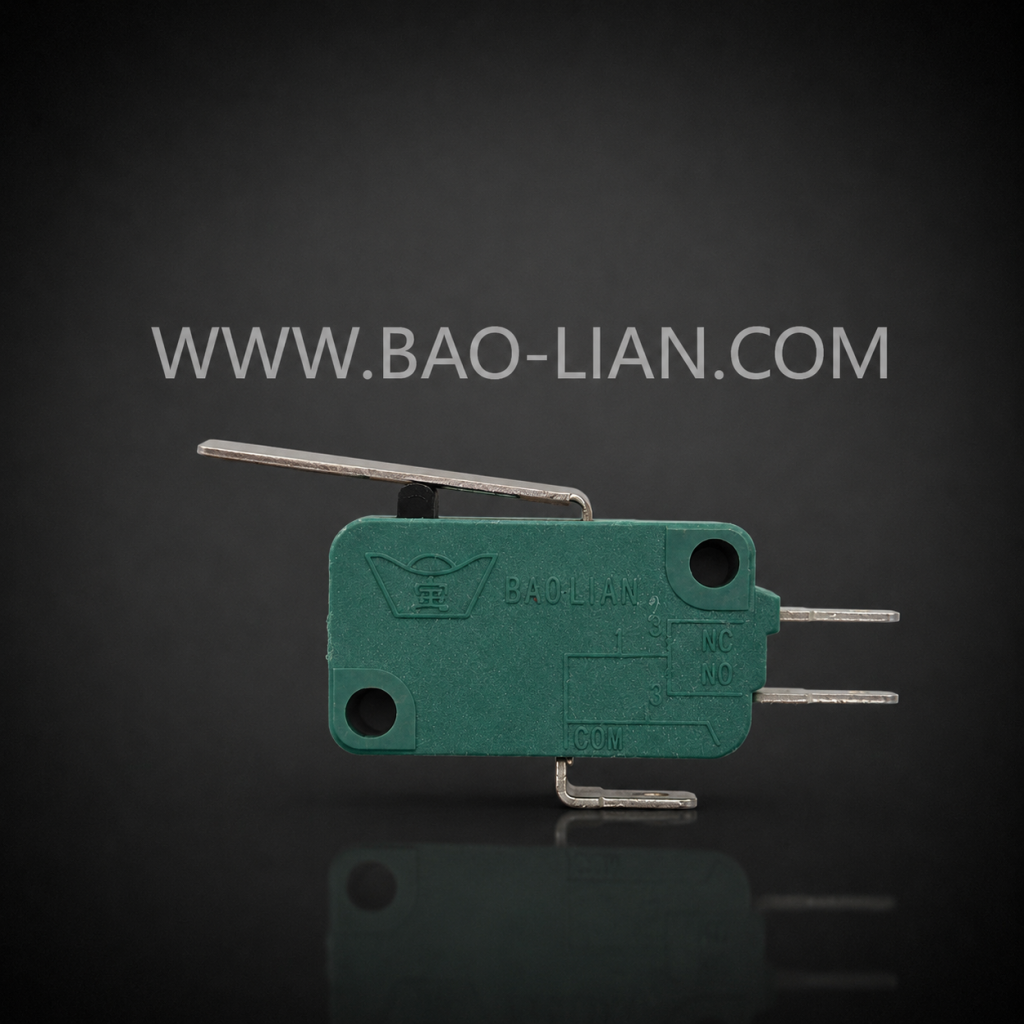
Hall-effect and microswitch joysticks detect movement differently. The useful buying question is which complete joystick fits your controller, panel and service plan. Choose an exact configuration rather than assuming that either sensing method guarantees a particular lifespan, feel or installation.
What changes with the sensing method?
A microswitch joystick detects movement through mechanical switch operation. Hall-effect sensing uses a magnetic field and an electronic sensor. That changes the sensing mechanism, but it does not remove the need to check the joystick’s mechanical parts, wiring and controller requirements.
For an introduction to the sensing principle, read what a Hall-effect arcade joystick is. To compare current configurations, browse the Baolian joystick range.
Start with the controller and wiring
- Identify the controller: record the machine or input-board model and the input it expects.
- Confirm the output: ask whether the exact joystick version supplies the required directional or proportional signals. A Hall-effect label alone does not establish the output type.
- Confirm supply and connections: obtain the voltage requirements, connector details and pin assignments for the selected version. Do not assume a familiar connector means the wiring matches.
- Confirm the harness: agree any wiring or adapter requirements before installing the sample.
The catalogue includes models with different PCB and lighting configurations. Treat those as version-specific choices; do not apply one model’s electrical details to the whole range.
Compare fit and feel on a sample
Use the joystick mounting checklist to compare hole spacing, panel thickness, shaft height and clearance. Then assess the installed sample’s movement, return to neutral and direction registration in the intended machine.
For example, the Hall-Effect RGB Omnidirectional Joystick is a current catalogue model to review. For a claw-machine project, also compare the listed All-Aluminum Claw Machine Joystick against the machine’s requirements. Product names are starting points for selection, not confirmation that models share mounting or wiring.
Compare service requirements and quoted costs
Ask which components can be serviced, what replacement parts are available for the exact model and how the assembly is removed from your cabinet. Evaluate purchase price, installation work and expected servicing together. Request model-specific test information where operating life is important.
There is no supported universal replacement interval, repair time or payback period for every installation. Base the decision on the selected product, the sample test and your own operating conditions.
Frequently asked questions
Is Hall-effect automatically a drop-in upgrade?
No. Confirm the output, supply, pin assignments, mounting and controller compatibility before replacing a joystick with a different design.
Does Hall-effect always mean analog output?
No. The sensing principle does not specify the finished product’s interface. Ask for the exact model’s output information and compare it with the controller.
Which type should I choose for a claw machine?
Start with the existing controller and panel, then compare suitable models and an installed sample. Share the machine type, photos, wiring information and operating requirements so the proposed configuration can be checked.
How do I request a model recommendation?
Send Baolian your project details: controller, mounting constraints, preferred handle, lighting requirements, quantity and delivery country. Use the OEM / ODM route if the standard configurations need adaptation.
Comments
No comments yet.